

Midnight Recovery Botanical Cleansing Oil How To Use
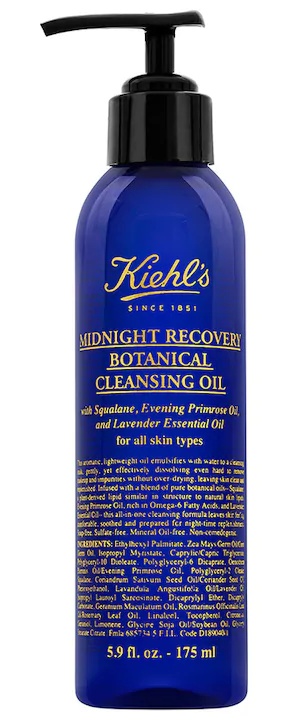
Midnight Recovery Botanical Cleansing Oil
Emulsifies with water to a cleansing milk, gently dissolving fifty-fifty the hardest to remove makeup and impurities without over-drying, leaving peel clean and replenished.
Uploaded past: livia on
Ingredients overview
Ethylhexyl Palmitate, Zea Mays Germ Oil / Corn Germ Oil, Isopropyl Myristate, Caprylic/Capric Triglyceride, Polyglyceryl-10 Dioleate, Polyglyceryl-6 Dicaprate, Oenothera Biennis Oil/Evening Primrose Oil, Polyglyceryl-2 Oleate, Squalane, Coriandrum Sativum Seed Oil/Coriander Seed Oil, Phenoxyethanol, Lavandula Angustifolia Oil / Lavender Oil, Isopropyl Lauroyl Sarcosinate, Dicaprylyl Ether, Dicaprylyl Carbonate, Geranium Maculatum Oil, Rosmarinus Officinalis Leaf Oil / Rosemary Leaf Oil, Linalool, Tocopherol, Citronellol, Geraniol, Limonene, Glycine Soja Oil / Soybean Oil, Glyceryl Stearate Citrate
Highlights
Key Ingredients
Other Ingredients
Emollient: Ethylhexyl Palmitate, Zea Mays Germ Oil / Corn Germ Oil, Isopropyl Myristate, Caprylic/Capric Triglyceride, Oenothera Biennis Oil/Evening Primrose Oil, Squalane, Coriandrum Sativum Seed Oil/Coriander Seed Oil, Isopropyl Lauroyl Sarcosinate, Dicaprylyl Ether, Dicaprylyl Carbonate, Glycine Soja Oil / Soybean Oil, Glyceryl Stearate Citrate
Skim through
| Ingredient name | what-information technology-does | irr., com. | ID-Rating |
|---|---|---|---|
| Ethylhexyl Palmitate | emollient, perfuming | 0, 2-4 | |
| Zea Mays Germ Oil / Corn Germ Oil | emollient | ||
| Isopropyl Myristate | emollient, perfuming | iii, 3-5 | |
| Caprylic/Capric Triglyceride | emollient | ||
| Polyglyceryl-10 Dioleate | emulsifying | ||
| Polyglyceryl-6 Dicaprate | emulsifying | ||
| Oenothera Biennis Oil/Evening Primrose Oil | soothing, emollient | two, three | goodie |
| Polyglyceryl-2 Oleate | emulsifying | ||
| Squalane | skin-identical ingredient, emollient | 0, 1 | goodie |
| Coriandrum Sativum Seed Oil/Coriander Seed Oil | emollient | ||
| Phenoxyethanol | preservative | ||
| Lavandula Angustifolia Oil / Lavender Oil | antimicrobial/antibacterial, perfuming | icky | |
| Isopropyl Lauroyl Sarcosinate | emollient | ||
| Dicaprylyl Ether | emollient, solvent | ||
| Dicaprylyl Carbonate | emollient | ||
| Geranium Maculatum Oil | |||
| Rosmarinus Officinalis Leaf Oil / Rosemary Leaf Oil | antioxidant, antimicrobial/antibacterial | disgusting | |
| Linalool | perfuming | icky | |
| Tocopherol | antioxidant | 0-iii, 0-three | goodie |
| Citronellol | perfuming | disgusting | |
| Geraniol | perfuming | icky | |
| Limonene | perfuming, solvent | icky | |
| Glycine Soja Oil / Soybean Oil | emollient, perfuming | 0, iii | goodie |
| Glyceryl Stearate Citrate | emollient, emulsifying |
Kiehl's Midnight Recovery Botanical Cleansing Oil
Ingredients explainedA super mutual, medium-spreading emollient ester that gives richness to the formula and a mild experience during rubout. Information technology can be a replacement for mineral oil and is oft combined with other emollients to accomplish dissimilar sensorial properties.
 We don't accept description for this ingredient nevertheless.
A clear, colorless oil-like liquid that makes the skin feel smoothen and nice (aka emollient) and it does so without it being greasy.
What's more, information technology can evenreduce the heavy, greasy feel in products with high oil content. Information technology'due south also fast-spreading pregnant that information technology gives the formula a proficient, overnice slip. Information technologyabsorbs quickly into the skin and helps other ingredients to penetrate quicker and deeper.
Thank you to all this, information technology'due south one of the most normally used emollients out at that place. At that place is only one footling drawback: it has a loftier comedogenic index (v out of 5...), and so it might clog pores if you're decumbent to it.
A super common emollient that makes your skin experience squeamish and polish. Information technology comes from coconut oil and glycerin, information technology'south lite-textured, clear, odorless and non-greasy. It's a nice ingredient that just feels good on the pare, is super well tolerated by every skin type and easy to formulate with. No wonder it's pop.
A pale yellow to pale brownish paste that tin help to mix oil and water together. Combined with beau emulsifier called polyglyceryl-two sesquicaprylate, the 2 together are specifically recommended for oil-based facial cleansers that tin can be used besides with moisture hands on moisture face up (different most makeup remover oils that have to be used with dry hands on dry out face up).
We don't have clarification for this ingredient yet.
Also-called: Evening Primrose Oil, EPO;Oenothera Biennis Oil | What-it-does: soothing, emollient | Irritancy: 2 | Comedogenicity: 3
The oil coming from the seeds of the nice, little, yellowish-flowered plant called Evening Primrose. Similar to other plant oils, it'due south loaded with nourishing and moisturizing fatty acids. It'southward a very rich source of linoleic acid (66-76%), and as well contains the soothing and healing superstar fatty acid, gamma-linolenic acrid (aka GLA, 7-12%) (Btw, the richest known source of GLA is the borage oil, merely evening primrose still counts as a very good source of it). It likewise contains oleic acrid, but not too much around 6-15%.
Since the 1980's, EPO is a well-known nutrient supplement and there are quite a lot of studies examining what happens if you lot have it orally. It seems to be helpful with a bunch of things: atopic dermatitis, dry eyes, brittle nails, sunburn and even acne.
As for the skin, information technology's a great hydrating plant oil, that can also reduce inflammation and irritation. It'southward a superb healing agent that can truly help dry pare, not just on the surface by roofing it (and not letting water to evaporate) only past initiating structural changes inside the pare. If that'south non enough, it too helps skin cell regeneration.
All in all, a real goodie especially for dry out, hands irritated skin.
Nosotros don't have clarification for this ingredient nevertheless.
It seems to us that squalane is in style and there is a reason for it. Chemically speaking, information technology is a saturated (no double bonds) hydrocarbon (a molecule consisting only of carbon and hydrogen), meaning that it'southward a nice and stable oily liquid with a long shelf life.
It occurs naturally in certain fish and plant oils (e.g. olive), and in the sebum (the oily stuff our skin produces) of the human being skin. Equally f.c. puts it in his awesome weblog post, squalane's master things are "emolliency , surface apoplexy, and TEWL prevention all with extreme cosmetic elegance". In other words, information technology's a superb moisturizer that makes your skin prissy and polish, without existence heavy or greasy.
Another advantage of squalane is that information technology is pretty much uniform with all peel types and skin conditions. It is fantabulous for acne-decumbent skin and safety to apply fifty-fifty if you have fungi-related skin problems, like seborrhea or fungal acne.
The unsaturated (with double bonds) and hence less stable version of Squalane is Squaleastwardne, you tin can read about it here >>
Also-called: Coriander Seed Oil;Coriandrum Sativum Seed Oil | What-it-does: emollient
We don't have description for this ingredient nonetheless.
Information technology's pretty much the current It-preservative. It's safety and gentle, but even more importantly, information technology's not a feared-by-everyone-mostly-without-scientific-reason paraben.
It's not something new: it was introduced around 1950 and today information technology tin can be used up to 1% worldwide. It can be plant in nature - in green tea - but the version used in cosmetics is constructed.
Other than having a proficient safety profile and being quite gentle to the pare it has some other advantages too. It can be used in many types of formulations equally it has neat thermal stability (can be heated up to 85°C) and works on a wide range of pH levels (ph three-10).
It's oft used together with ethylhexylglycerin as it nicely improves the preservative activity of phenoxyethanol.
We have to start past writing how fascinated we are by the amazing lavender fields of Provance and we do love pretty much everything about lavender: its look, its color, its scent.... simply, when it comes to skincare, lavender is a questionable ingredient that y'all probably practise non want in your skincare products.
First, let usa get-go with the pros: it has a lovely scent, and then no wonder that information technology is popular as a fragrance ingredient in natural products wanting to be costless from synthetic fragrances but nonetheless wanting to smell nice. The scent of lavender is famous for having calming and relaxing properties and some smallish scientific studies practise support that. Inhaled volatile compounds seem to have a soothing effect on the fundamental nervous system and studies have shown that lavander aromatherapy tin better patient'southward anxiety and feel in hospitals.
Another pro is that lavender oil has some squeamish antimicrobial and antibacterial properties. It also has some local pain relieving and musculus relaxing magical powers. Lavender oil is also often claimed to have anti-inflammatory properties. Nosotros have found a study confirming this but it was the essential oil of the leaves and non the much more commonly used flowers and the ii differ in their main chemical compounds very much. (The main components of the flower essential oil are linalyl acetate and linalool [around lxxx% the two together] while information technology is 1,8-Cineole [around 65%] in the essential oil of the leaves.)
Now, let us look at the cons: like to a bunch of other essential oils, the master components of lavander oil are potentially irritating fragrant components. The 2 primary components arelinalyl acetate (about 50%) and linalool (about 35%) and both autoxidise on exposure to the air forming potent contact allergens. To make things even worse, lavender oil seems to be cytotoxic from concentrations as low as 0.25% (concentration up to 0.125% were ok).
At that place is also an often cited Japanese report that fabricated patch tests with lavander oil for 9 years and institute a huge increment in lavander oil sensitivity in 1997 (from one.1% in 1990 to viii.seven% in 1997 and 13.ix% in 1998). This was the year when using stale lavender flowers in pillows, wardrobes, and elsewhere became stylish in Nihon, and so it seems that increased exposure to lavander results in increased risk of sensitivity.
Overall, it makes u.s.a. sad to write bad things about such a lovely constitute, merely when it comes to skincare, you will exist better off without lavender.
A colorless to light xanthous oily fluid that works every bit an emollient (makes your peel nice and smooth) and a solvent for poorly soluble materials, such as sunscreen agents. It also has a light touch, low aroma, and skillful spreadability. It is derived from the amino acrid sarcosine and is biodegradable.
A clear, colorless and odorless oily liquid that works as a fast-spreading emollient with a dry skin experience.
A clear, colorless, almost odorless oil that spreads nicely and easily and gives a velvet dry out skin feel. Information technology is skilful friends with sunscreen agents and helps to solubilize them. Too, it makes sunscreens feel lighter and spread easier.
Nosotros don't have clarification for this ingredient yet.
The essential oil coming from the leafs of the lovely herb, rosemary. It contains several fragrant components, including the well-known irritant, camphor (around xv%). It has a dainty scent, is a strong antioxidant and it's also an antimicrobial agent.
If your skin is sensitive, information technology's probably a skilful thought to avert information technology.
Linalool is a super common fragrance ingredient. Information technology's kind of everywhere - both in plants and in corrective products. It's part of 200 natural oils including lavender, ylang-ylang, bergamot, jasmine, geranium and it can be found in ninety-95% of prestige perfumes on the market.
The problem with linalool is, that just like limonene information technology oxidises on air exposure and becomes allergenic. That'south why a product containing linalool that has been opened for several months is more likely to exist allergenic than a fresh one.
A study made in the United kingdom with 483 people tested the allergic reaction to 3% oxidised linalool and 2.3% had positive test results.
Also-called: Vitamin E | What-it-does: antioxidant | Irritancy: 0-3 | Comedogenicity: 0-3
- Primary fat-soluble antioxidant in our skin
- Significant photoprotection confronting UVB rays
- Vit C + Vit E work in synergy and provide great photoprotection
- Has emollient properties
- Easy to formulate, stable and relatively inexpensive
Read all the geeky details about Tocopherol here >>
Citronellol is a very common fragrance ingredient with a squeamish rose-like aroma. In the UK, information technology's actually the tertiary near often listed perfume on the ingredient lists.
It can exist naturally found in geranium oil (near xxx%) or rose oil (virtually 25%).
Equally with all fragrance ingredients, citronellol can also cause allergic contact dermatitis and should be avoided if y'all have perfume allergy. In a 2001 worldwide study with 178 people with known sensitization to fragrances citronellol tested positive in 5.6% of the cases.
There is no known anti-aging or positive skin benefits of the ingredient. It's in our products to get in smell dainty.
Geraniol is a common fragrance ingredient. Information technology smells like rose and can be found in rose oil or in small quantities in geranium, lemon and many other essential oils.
Just like other similar fragrance ingredients (like linalool and limonene) geraniol likewise oxidises on air exposure and becomes allergenic. Best to avoid if you lot have sensitive skin.
A supercommon and inexpensive fragrance ingredient. It's in many plants, due east.g. rosemary, eucalyptus, lavender, lemongrass, peppermint and it's the main component (about 50-90%) of the peel oil of citrus fruits.
It does odor nice merely the problem is that it oxidizes on air exposure and the resulting stuff is not good for the pare. Oxidized limonene tin cause allergic contact dermatitis and counts every bit a frequent peel sensitizer.
Limonene's nr1 function is definitely being a fragrance component, simply at that place are several studies showing that it'southward as well a penetration enhancer, mainly for oil-loving components.
All in all, limonene has some pros and cons, but - specially if your skin is sensitive - the cons probably outweigh the pros.
Likewise-called: Soybean Oil;Glycine Soja Oil | What-it-does: emollient, perfuming | Irritancy: 0 | Comedogenicity: 3
The emollient plant oil coming from the soybean. It is considered to exist a nice, cost-effective base oil with moisturizing properties. As for its fatty acrid profile, it contains 48-59% barrier-repairing linoleic acid, 17-30% nourishing oleic acid and as well some (iv.5-11%) potentially anti-inflammatory linolenic acrid.
Glyceryl stearate citrate is similar to the super common skincare ingredient glyceryl stearate, and is similarly used to aid combine waters and oils (emulsifier) and to make your peel experience prissy and soft (emollient).
The main difference between glyceryl stearate citrate and its cousin glyceryl stearate is that this one has a citric acrid molecule likewise attached to its glycerin. This makes it what chemists call a diacylglycerol, which is a fancy word for ii acids (in this case, citric acid and stearic acid) fastened together with a glycerin bridge. Simply when it comes to cosmetics, all you need to know is that both glyceryl stearate citrate and glyceryl stearate are condom, tried and true emulsifiers. Await to see them in formulas with both h2o-based and oil-based ingredients (think moisturizers and lotions).
You may besides want to take a expect at...
A super common, medium-spreading emollient ester that gives richness to the formula and a mild experience during rubout. [more] A clear, colorless oil-like liquid that's used as a fast-spreading, non-greasy emollient. [more] A very common emollient that makes your skin feel nice and smooth. Comes from coconut oil and glycerin, information technology's low-cal-textured, clear, odorless and not-greasy. [more than] A pale yellow to stake chocolate-brown paste that tin help to mix oil and h2o together. It'due south specifically recommended for oil-based facial cleansers that tin can exist used also with wet hands on wet confront. [more] An emollient plant oil loaded with nourishing and moisturizing fatty acids. It's a very rich source of linoleic acid (66-76%), and also contains the soothing and healing superstar fatty acid, gamma-linoleic acrid. [more] An emollient and natural moisturizer that tin can be institute also in the sebum (oily stuff our skin produces). It leaves a nice non-greasy, not-heavy feeling on the skin. [more] Pretty much the current Information technology-preservative. Information technology'southward condom and gentle, and tin can be used upward to i% worldwide. [more] Lavender - essential oil with a calming odor and antimicrobial properties. Contains fragrant components (linalyl acetate - 50% and linalool - 35%) and might be cytotoxic from 0.25%. [more] A colorless to lite xanthous oily fluid that works as an emollient (makes your skin nice and smooth) and a solvent for poorly soluble materials, such as sunscreen agents. [more] A clear, colorless and odorless oily liquid that works equally a fast-spreading emollient with a dry skin feel. A clear, colorless, almost odorless oil that spreads nicely and easily and gives a velvet dry skin feel. It is practiced friends with sunscreen agents and helps to solubilize them. The essential oil coming from the leafs of rosemary. It has a nice smell, is a potent antioxidant and it'due south also an antimicrobial agent. Contains several fragrant components, including potential pare irritant, camphor (around 15%). A super common fragrance ingredient that tin can exist found amongst others in lavender, ylang-ylang, bergamot or jasmine. The downside of it is that it oxidises on air exposure and might become allergenic. [more than] Pure Vitamin E. Smashing antioxidant that gives significant photoprotection confronting UVB rays. Works in synergy with Vitamin C. [more] A mutual fragrance ingredient with a squeamish rose-similar smell. [more] A common fragrance ingredient that smells like rose and can be found in rose oil. [more] A super common fragrance ingredient found naturally in many plants including citrus peel oils, rosemary or lavender. Information technology autoxidizes on air exposure and counts as a mutual skin sensitizer. [more] The emollient plant oil coming from the soybean. It is rich in bulwark repairing linoleic acrid (48-59%) and is generally a good moisturizing oil. [more] Glyceryl stearate citrate is like to the super mutual skincare ingredient glyceryl stearate, and is similarly used to aid combine waters and oils (emulsifier) and to brand your pare feel nice and soft (emollient). The principal departure between glyceryl stearate citrate and its cousin glyceryl stearate is that this one has a citric acid molecule also attached to its glycerin. [more]
Source: https://incidecoder.com/products/kiehls-midnight-recovery-botanical-cleansing-oil
0 Response to "Midnight Recovery Botanical Cleansing Oil How To Use"
Post a Comment